Closed-Circuit Terminal Viewing
Asia NOW (Fair) > Paris, France
2026
RING/CAM (2025–2027) is the current series of exhibitions and performance interventions by 2 Curators 1 Collapse, unfolding across Copenhagen and its peripheries and, with volume 4, in Paris.
For Ring/cam #4, London-based artist Ruby Chen presents a live performance examining how technological progress can reproduce systems of domination under the guise of innovation, questioning how the body is transformed, controlled and gradually absorbed by militarised infrastructures. Presented with 2 Curators 1 Collapse, who bring together critical perspectives on technology, colonial histories and embodiment, the performance invites us to consider collapse not only as rupture, but as a space for imagining alternative forms of relation and challenging established systems of power.
2 Curators 1 Collapse is a curatorial collective founded in 2024 by Elia-Rosa Guirous-Amasse and Joachim Aagaard Friis, working at the intersection of ecological collapse, anti-extractivist imaginaries and embodied curating. The name is not (just) a joke: the collective sees curating as a situated practice, shaped by the ecological, political and affective conditions it emerges from. As for the collapse, it depends on where you stand. From inside the institutions and infrastructures now coming apart, such as fossil capital and ideas of progress, it reads as loss; from the ecologies and communities already bearing that loss, it can just as easily read as release.

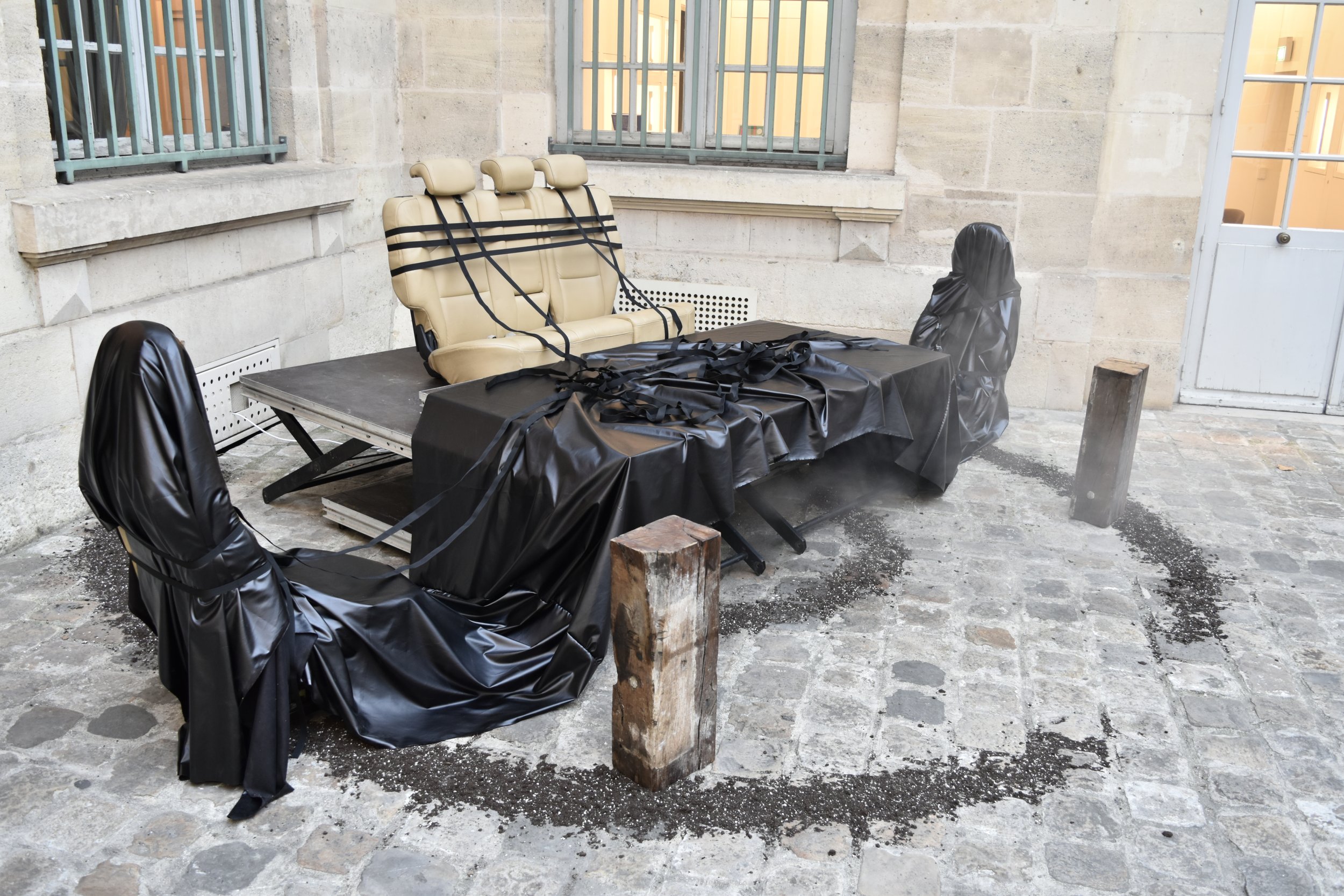
Closed-Circuit Terminal Viewing, 2026, Dimensions variable. Car seats, stages, faux leather fabric, belt straps, wood, dirt, fog machine, sound and performance
Event-0 Manual Override
LUmkA > London, United Kingdom
LUmkA is pleased to present Ruby Chen’s first solo exhibition in London, UK, EVENT-0 Manual Override. The artist presents a series of new works that investigate humanity’s compulsion toward technologization and invention. To celebrate, please join us for an opening reception on 12 September 2026 at 96 Robert Street, NW1 3Qp from 18:00 – 21:00.
Staging a tableau of sculpture, sound, and installation, EVENT-0 Manual Override renders a potential future; an ecosystem grown from the ruins of 21st-century technological infrastructures. From forms reminiscent of CERN’s particle accelerator to seats and machine parts of abandoned high-speed vehicles, Chen questions humanity's progression with technology and its potential downfalls.
Inspired by the burden of human curiosity, the artist probes mankind’s carnal desire to trace our beginning and streamline our future. EVENT-0 Manual Override questions how technological systems progressively organize human perception and optimize behaviour through logics of speed and efficiency or order.
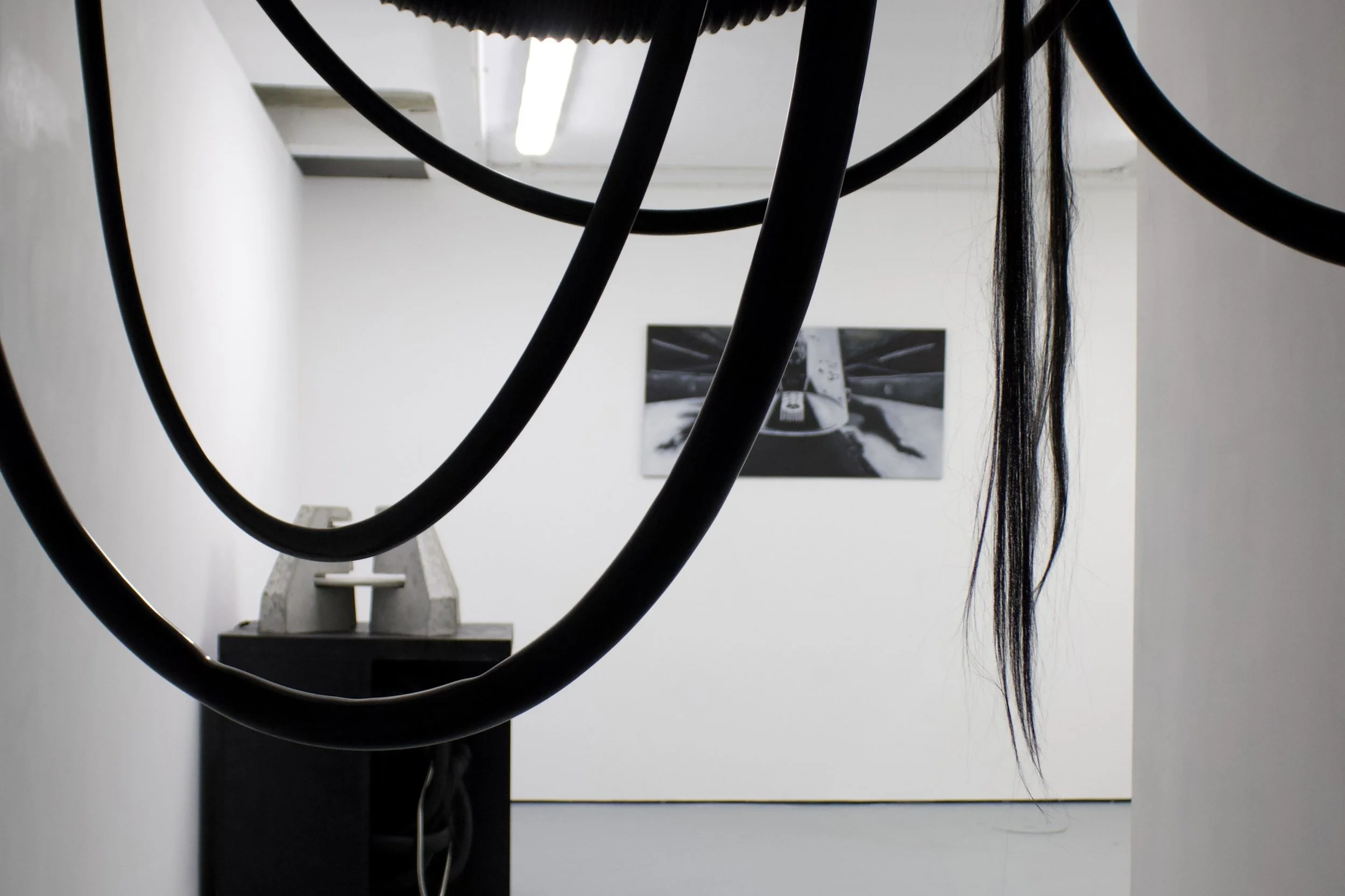
Immersed in the subterranean installation, Chen’s works present human compulsion’s ability to seep into technological networks, posing that the systems are innately haunted by the very bodies they attempt to optimize. This haunting, exhibited through corporeal overgrowth in the form of moss-like hair accumulations, persists as contamination, revealing the human subconscious’ capacity to interrupt technology’s seemingly closed systems. No matter how threatening, standardized, or efficient the technological systems become, EVENT-0 Manual Override highlights how the anthropomorphic poetics of humanity and its compulsion, embedded and encoded, seep through.
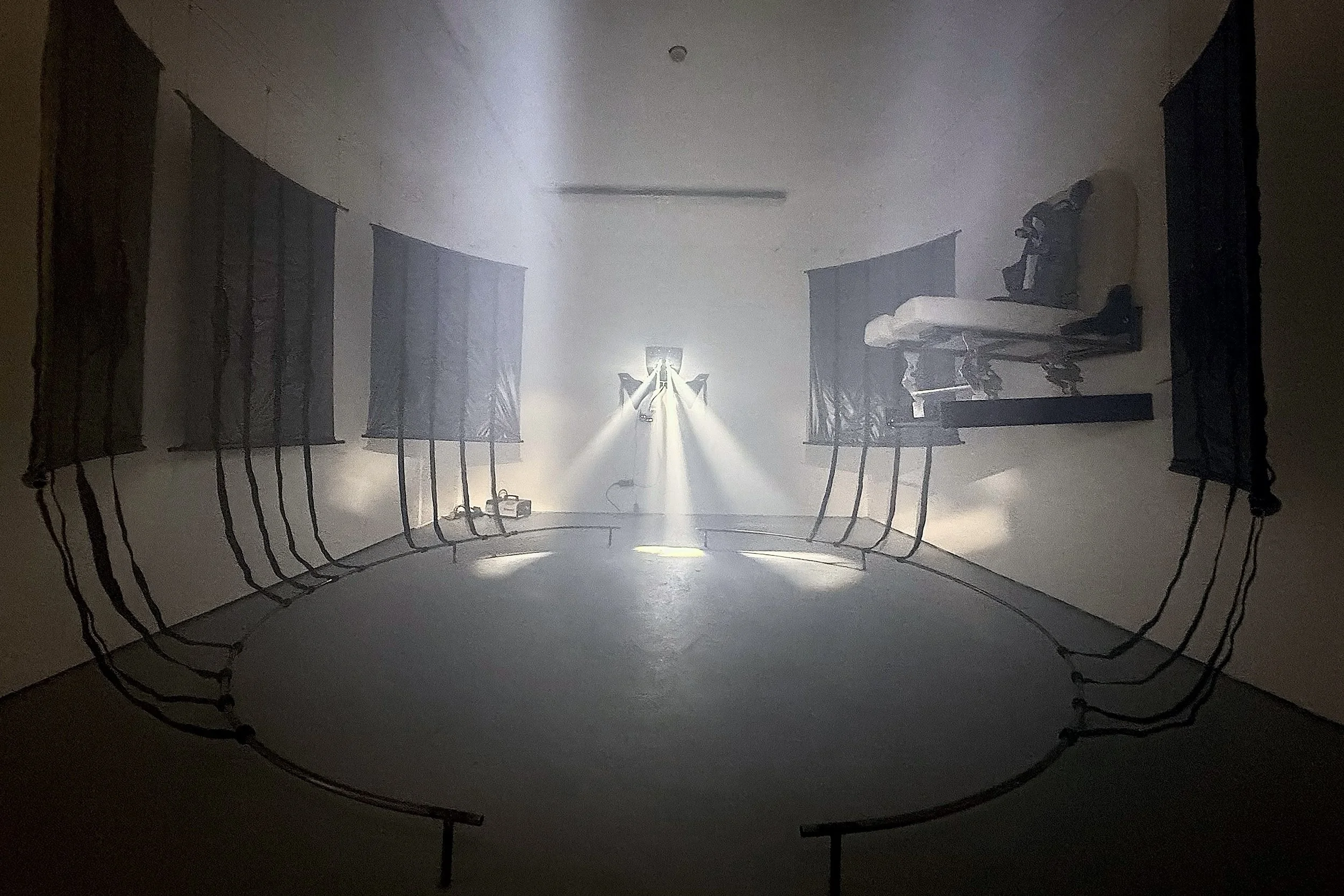
Cockpit, 2026, 180 x 345 x 345 cm. Conductive fabric, metal, wire casing, bolts, and hair
Cowling Blinkers, 2026, 41 x 75 x 20 cm. Motorcycle headlights, motorcycle fairings, metal, hair, and Arduino
Entrails, 2026, 133 x 219 x 107 cm. Rubber tubes, plastic, foil, OSB wood, spray paint, and hair
Linac4, 2026, 110 x 78 x 78 cm. OSB wood, concrete, paint, rubber, hair, metal, and particle accelerator
Pyknolepsy, 2026, 58 x 118 cm. Acrylic on wood
Privacy Index
LUmkA > London, United Kingdom
LUmkA is pleased to present the gallery’s first exhibition in London, United Kingdom Privacy Index, since its recent move from New York, New York. Privacy Index will be on view from 19 March 2026 to 11 April 2026, with an opening reception from 18:00-21:00 featuring a performance by LINX on 19 March 2026.
Our participation with the media -- a concealed labor-- is stored as data points in elusive encryption servers, where our interests and interactions are used to formulate and inform targeted marketing techniques and larger, the propaganda machine.
As theorized by Michel Foucault, the Panopticon conceptualizes power’s operation in society through constant and invisible observation. This omnipresence of surveillance, digitally and physically, informs a conscience to conformity within the boundaries of social norms and expectations. This self-performed regulation is not out of direct coercion, but in the recognition that one’s actions are subject to constant and invisible scrutiny.
As an act of opposition to normalized omni-veillance and consumer labor’s hyper accessibility, Privacy Index stages a tableau of interventions by Ruby Chen, Nicholas Cheveldave, James Hoff, Miles Scharff, LINX, and Ivo Nagel, who not only organize a mirror reflecting and exposing the condition, but suggest self-representation through encryption. The exhibition inspires contemplation to the unconscious performances of self-regulation and provokes consciousness’s ability to rewire for resistance.
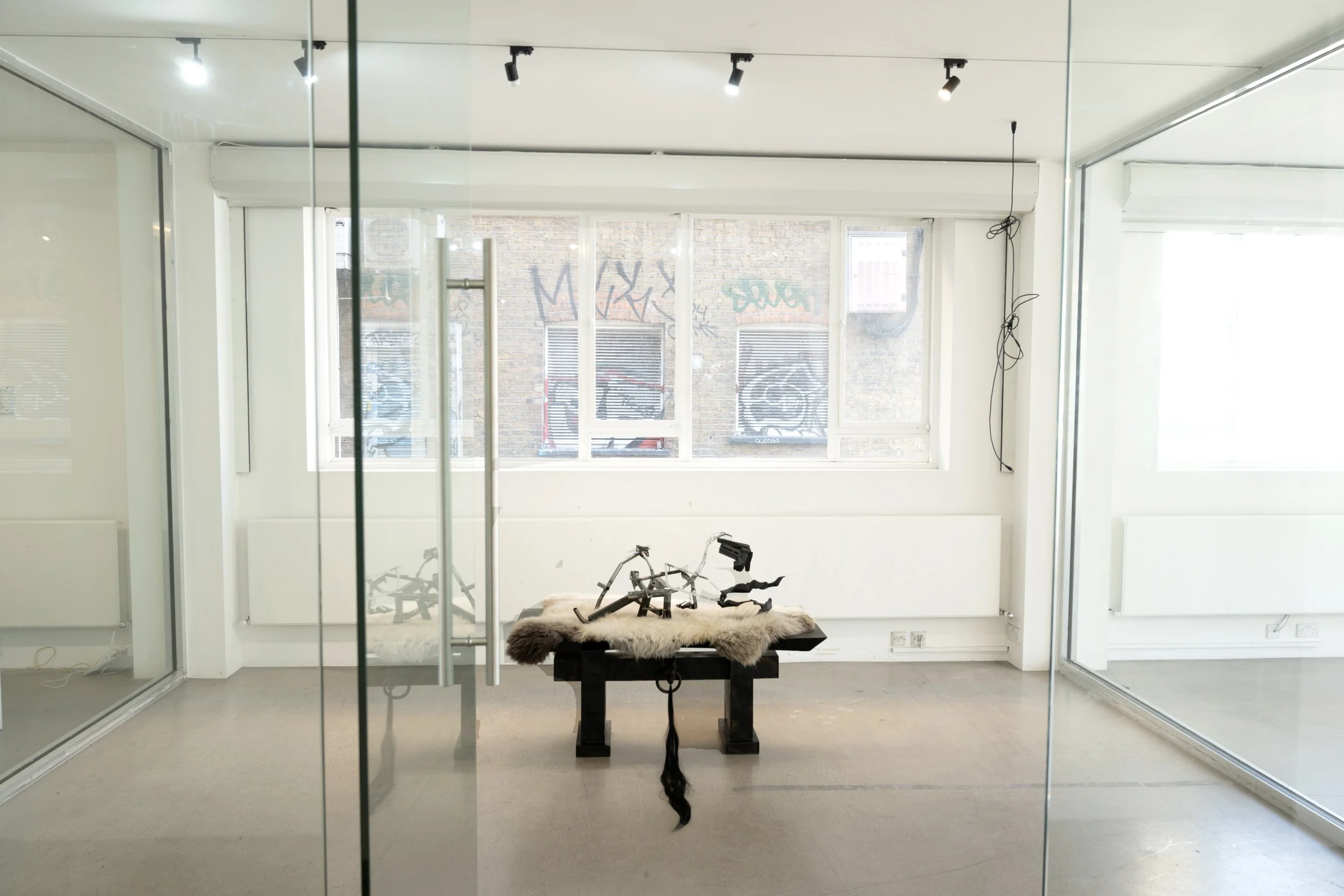
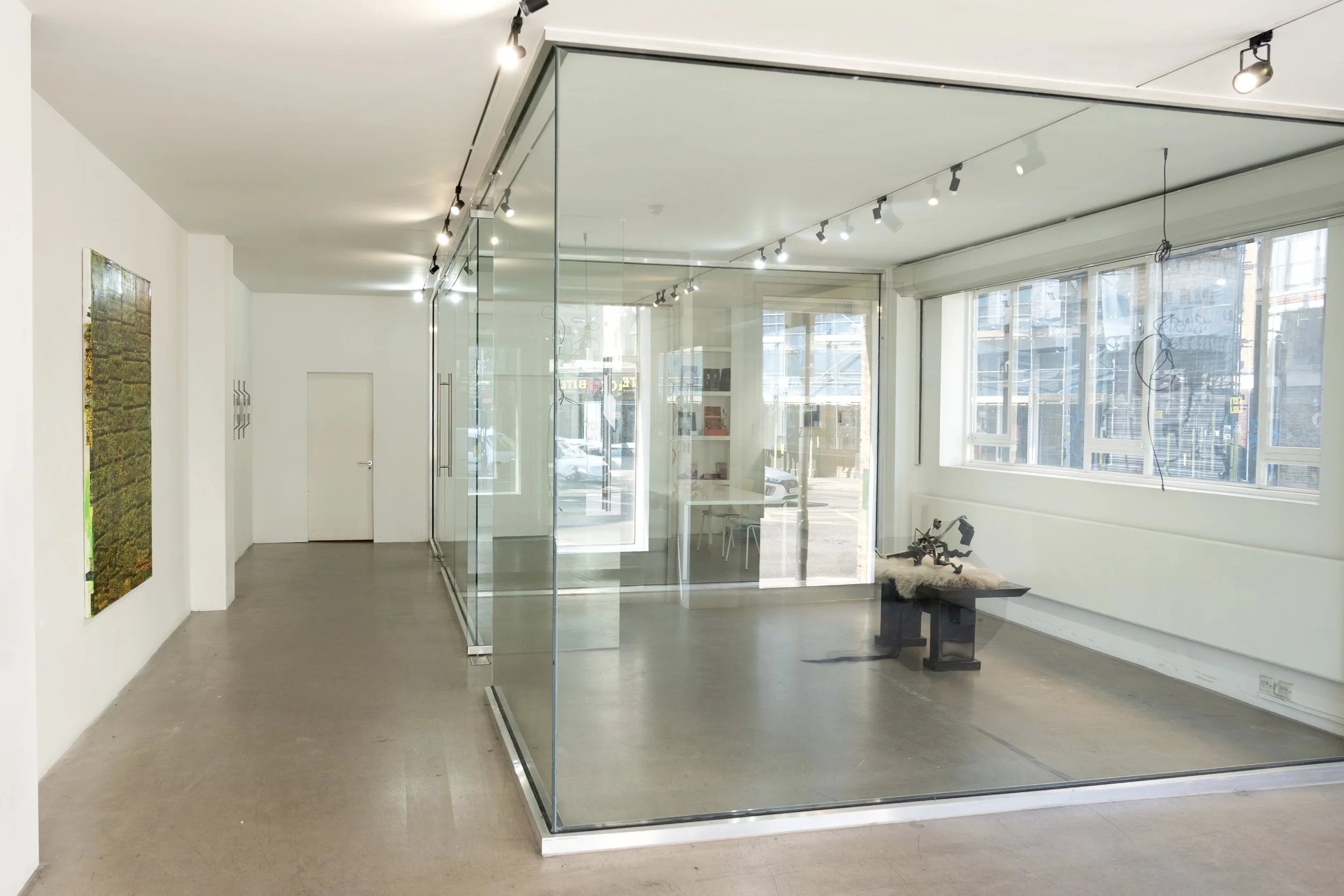
Archive Fever, 2026, 135 × 60 × 97 cm. Mild steel, sheepskin, copper, synthetic hair, plastic, and motor
MONTI8 is delighted to present “The Bell Jar”, a group show featuring the works of seven artists coming from different geographical areas and working on different media. The title is an homage to the novel written by the American writer and poet Sylvia Plath, published in 1963 and partially inspired by her own life. The story, the only novel published by Plath, revolves around a 19-year-old woman named Esther who describes herself trapped under a bell jar, a metaphor for a strong feeling of anxiety and depression caused by the rules of the society of the 50s.
But if the bell jar represents something bad in Plath’s famous novel, in the common belief this object has other meanings. At the beginning used for scientific experiments, it is still used to protect precious objects such as clocks and other decorative items. The object on the inside is displayed and – at the same time – private, it belongs to its owner, it can be observed but never touched from the outside.
In this case the bell jar can be seen as a barrier between the inside and the external world, and in general every kind of boundary that marks our life. Moreover, being under a bell jar sometimes means someone who is unaware of his/her surroundings, someone who ignores the facts. In this exhibition the bell jar metaphorically refers also to those artists who use painting, drawing and sculpture to show something private or intimate. Through their artistic practice, their work preserves a specific moment, an object, or figures captured in domestic or private scenes that the artist nevertheless seems to want to protect from the indiscreet gaze of the viewer. But the bell jar can also take on another meaning: to be under a bell jar means to be isolated from one’s own context, to ignore the facts that exist outside one’s own world.
The seven artists featured in the exhibition have been invited to engage with this theme and offer their own interpretation of it, constructing an intimate and silent journey, yet one of strong emotional impact. The exhibition is co-curated with Massimiliano Maglione.
The Bell Jar
MONTI8 > Rome, Italy
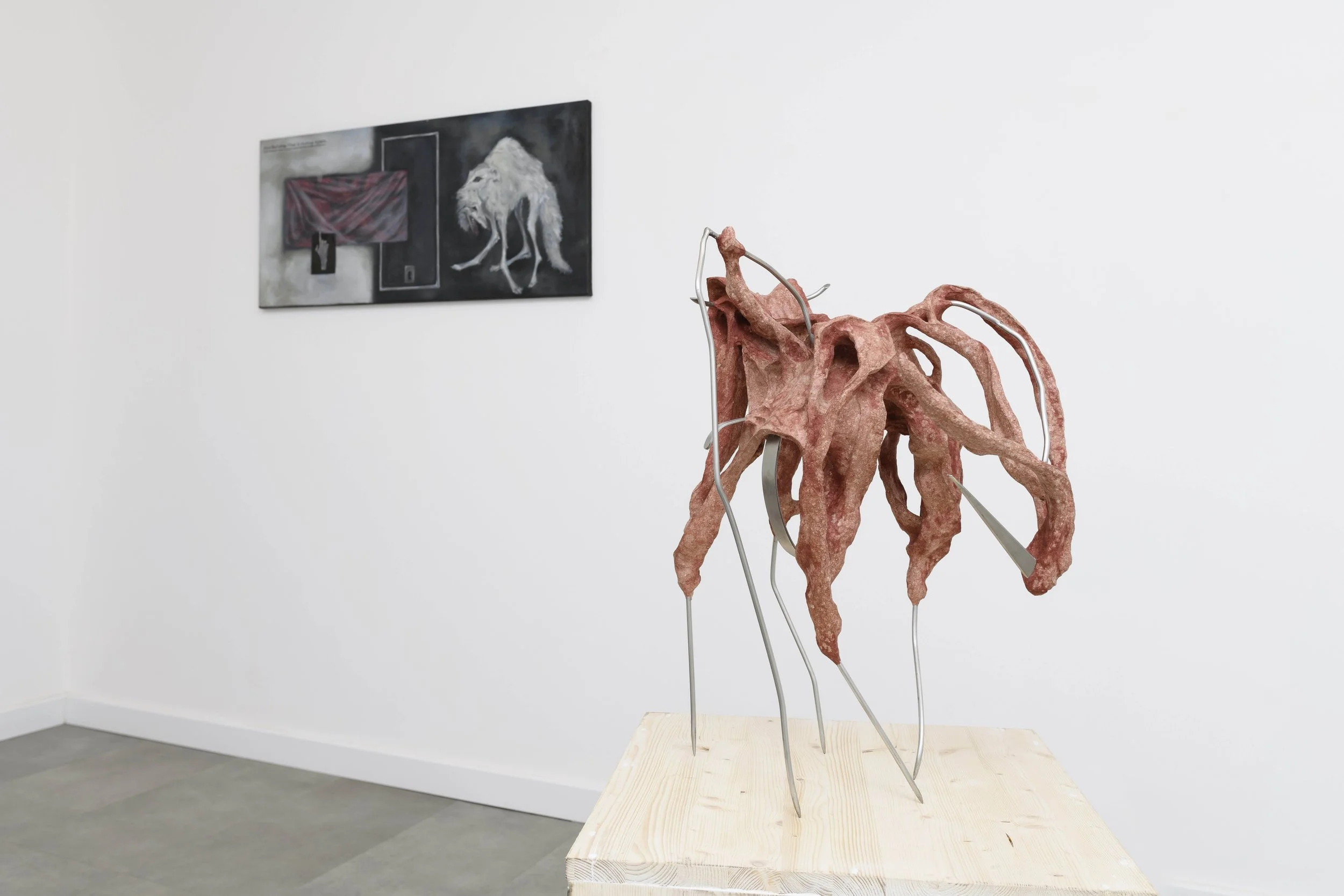
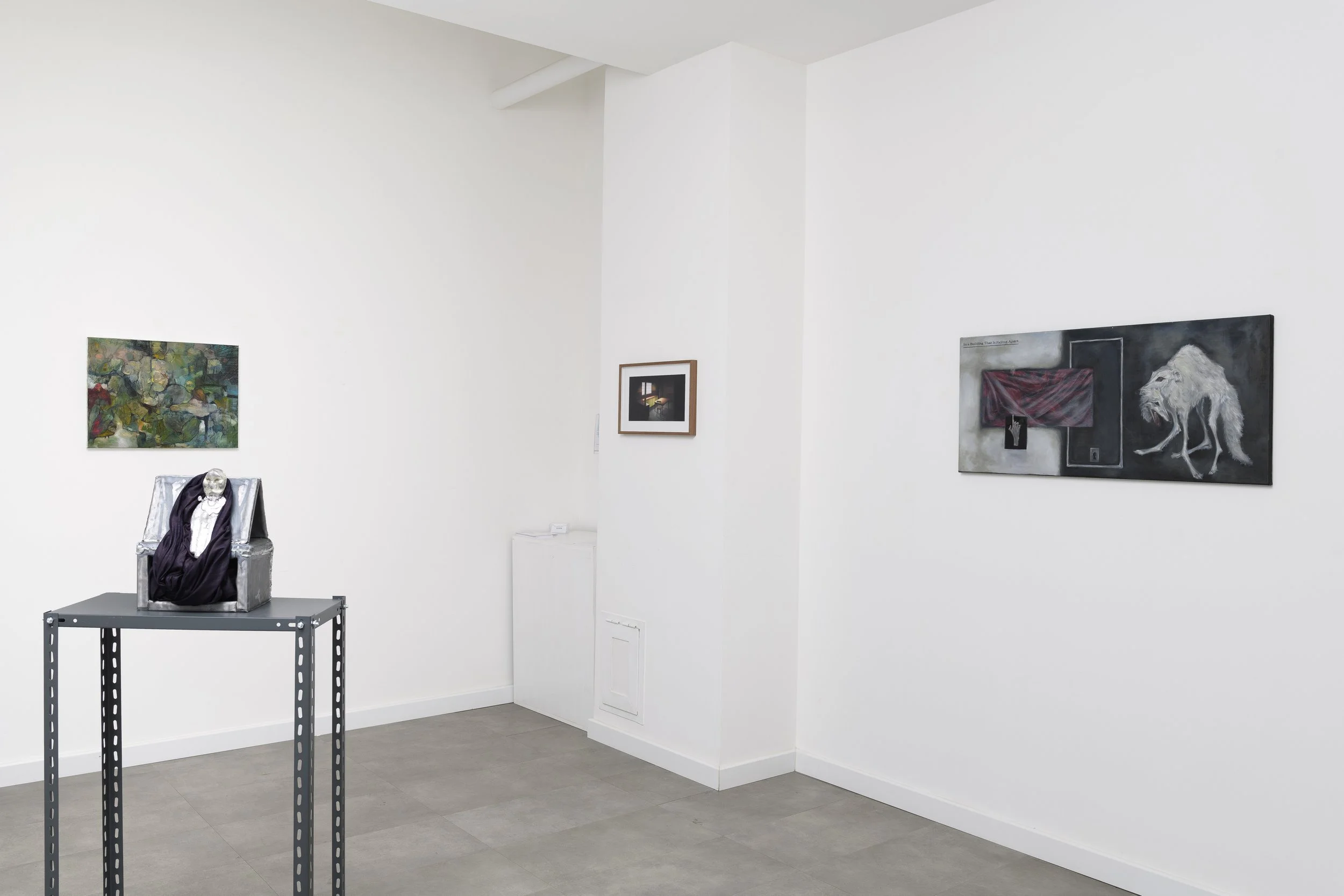
In a Building That Is Falling Apart, 2026, 50 × 110 cm. Oil on canvas
Minor Attractions (Fair)
Mandrake Hotel > London, United Kingdom
2025
LUmkA is pleased to present selected works by gallery artists Ruby Chen and Miles Scharff.
Chen, informed by evolutionary cosmologies and cybernetic theory, stages a bifurcated tableau: a lone figure gazing upon a passenger-less motorcycle. The juxtaposing images crystallize the estrangement between the body and the machine, illustrating how power and agency migrate seamlessly from the corporeal form to the apparatus. Chen’s work raises the question of whether technology remains a prosthetic extension of the mortal form or, having crossed an ontological threshold, now operates independently under its own autonomous desire.
Scharff, a sound artist with an education in physics, invents, records, and stages interactions between tangible objects and intangible signals. In his latest work, footage of a UFO plays across a screen while a field of steel dust—animated by magnetism—traces its movement. The artist’s apparatus converts invisible force into visible index, re-encoding perception through delay and distortion. Magnetism functions here as both medium and interference, an unseen pressure that reveals even as it conceals. The UFO emerges less as a stable image than as a site of mediation, oscillating between presence and concealment, shaped not by what it is but by the forces that render it perceptible. The work ultimately asks what it means to see when every act of seeing is already conditioned by what cannot be seen itself.
Through Chen’s tensile imagery and Scharff’s translated vibrations, both artists anthropomorphize technology and technologize the body, revealing the boundary between human and machine as a permeable, shifting membrane.
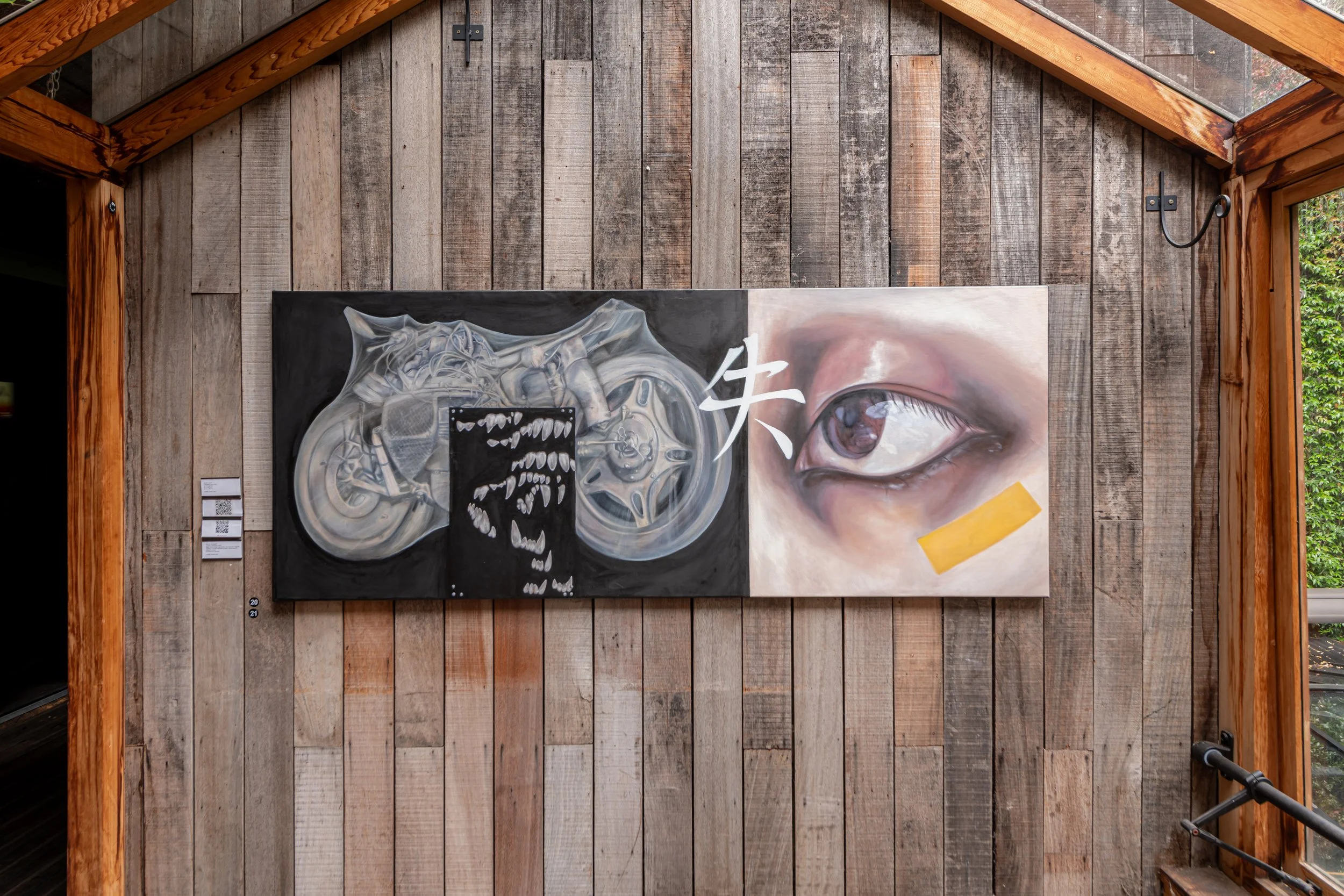
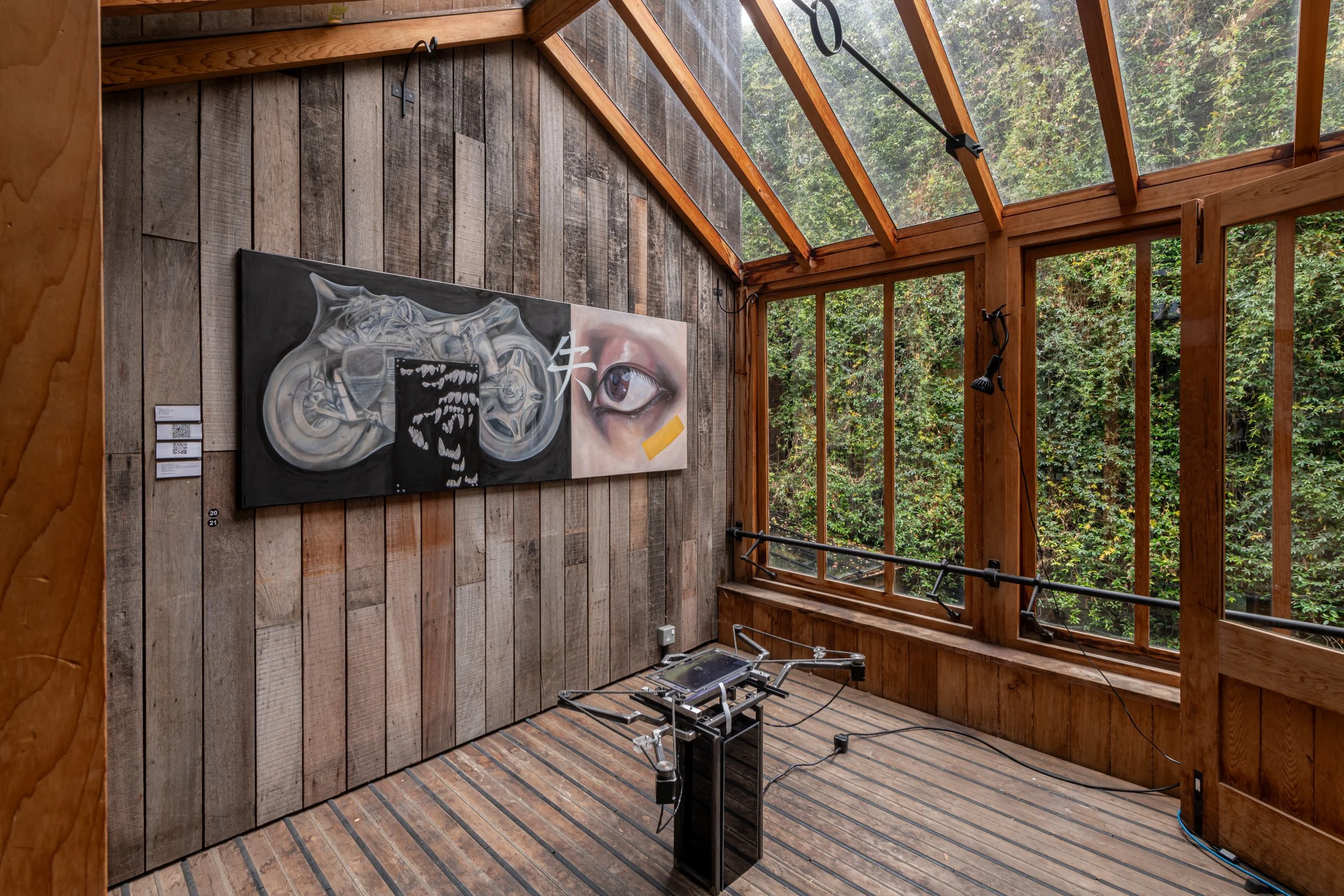
Paradise Lost, 2025, 200 × 80 cm. Oil on canvas
As It Turns Quiet, We Rot
LUmkA > Shanghai, China
LUmkA is pleased to present “As It Turns Quiet, We Rot,” a collaboration by Ruby Chen and Linx Peng on view from 8 to 14 August 2025 at 33ml Offspace, Shanghai, China.
“In the information age, an attitude of human evolution and refinement past our history books is disseminated. Genocides and land wars, a barbarism we agreed to outgrow, is live streamed to reveal the falsity of evolution. Perhaps we never surpassed the medieval dark age. Technofeudalism, as theorized by Yanis Varoufakis, parallels medieval feudalism to big tech’s control of the metaverse. We (the serfs) are bound to their platforms and offer the entirety of our digital information as currency. This process of data mining further instills the techno oligarchs position. Neophilia, a fetishistic obsession for the novel, drives a façade of technological breakthroughs and human advancements. These ‘inventions’ organize a masquerade of reform and evolution. With this attitude, the populace distances itself from our past as if to negate shame and honor those persecuted. Such detachment prevents one from engaging with the root of the problem– our generational traumas and compulsions we need to unravel and unlearn. Our dissociation and death drive propels the repetition of history.” - Ruby Chen
“Technology is often invisible in electronic music production: it operates quietly, not clearly perceived by humans, and has always been unknowable and decentralized. We have long been entangled with these tools. The concept of “residual media” by Wendy Chun emphasizes that analogue technology never really disappeared, but continues to echo in different forms. Sound technologies related to the analogue media (tape recording, digital errors, etc.) transcend the body and time, forming a ‘ghostly’ feeling with blurred boundaries, triggering repeated returns of hallucinations. According to ‘hauntology’, as introduced by Jacques Derridas, technological media acts as a ghost medium, and recordings themselves are a kind of dislocated device which allows for the past to appear.” - LINX
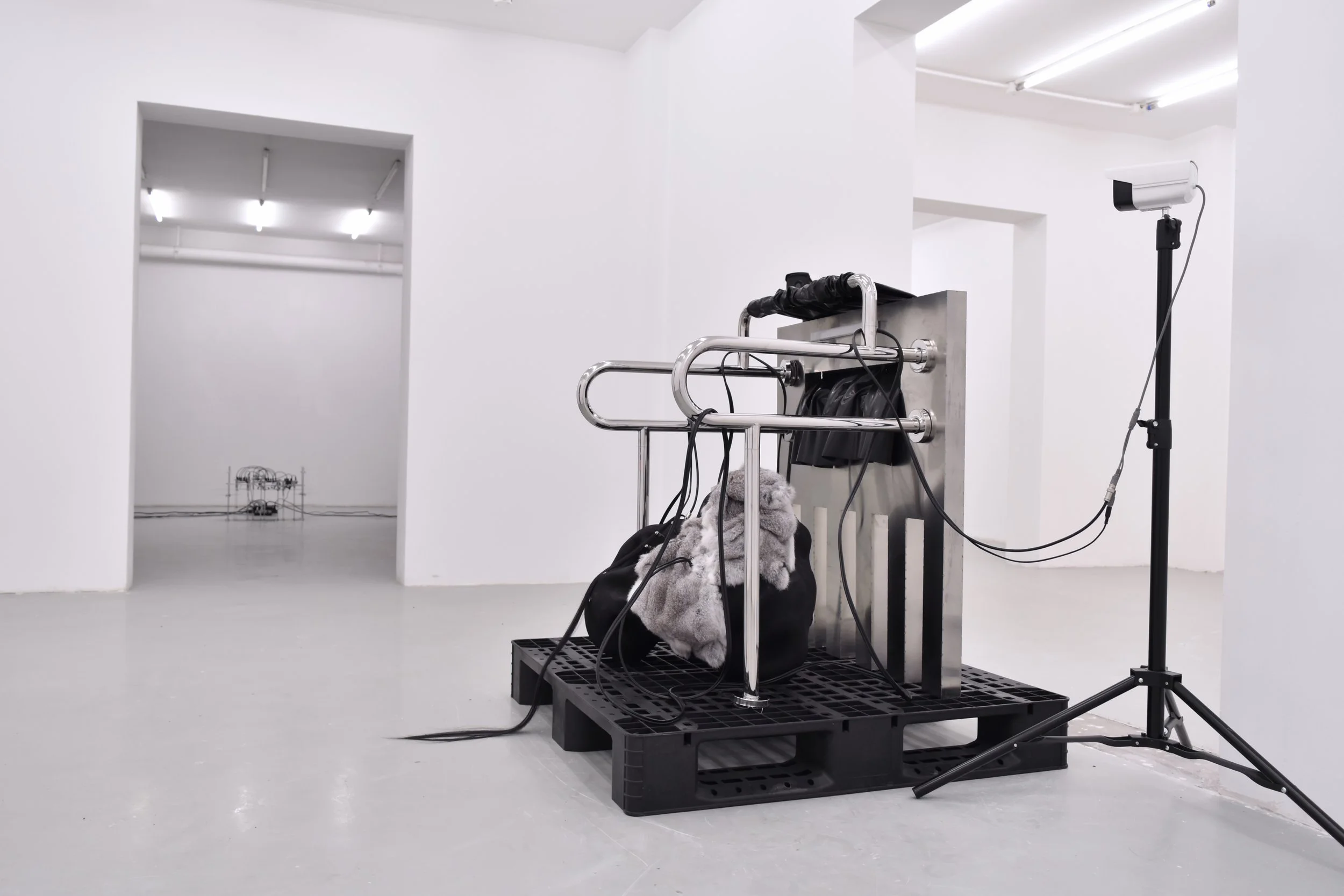
Through sculpture and sound, Chen and Peng explore the performance of innovation and its inability to suppress primal impulses. In observing digital serfdom’s modernizing of dark age labor practices, the artists position a parallel between the convention of newness and corporate confinement. Entangling their practices, an organization of the animate and inanimate highlights the exploration of the subconscious as a means to learn perspectives instilled by the false structure of “human evolution.”
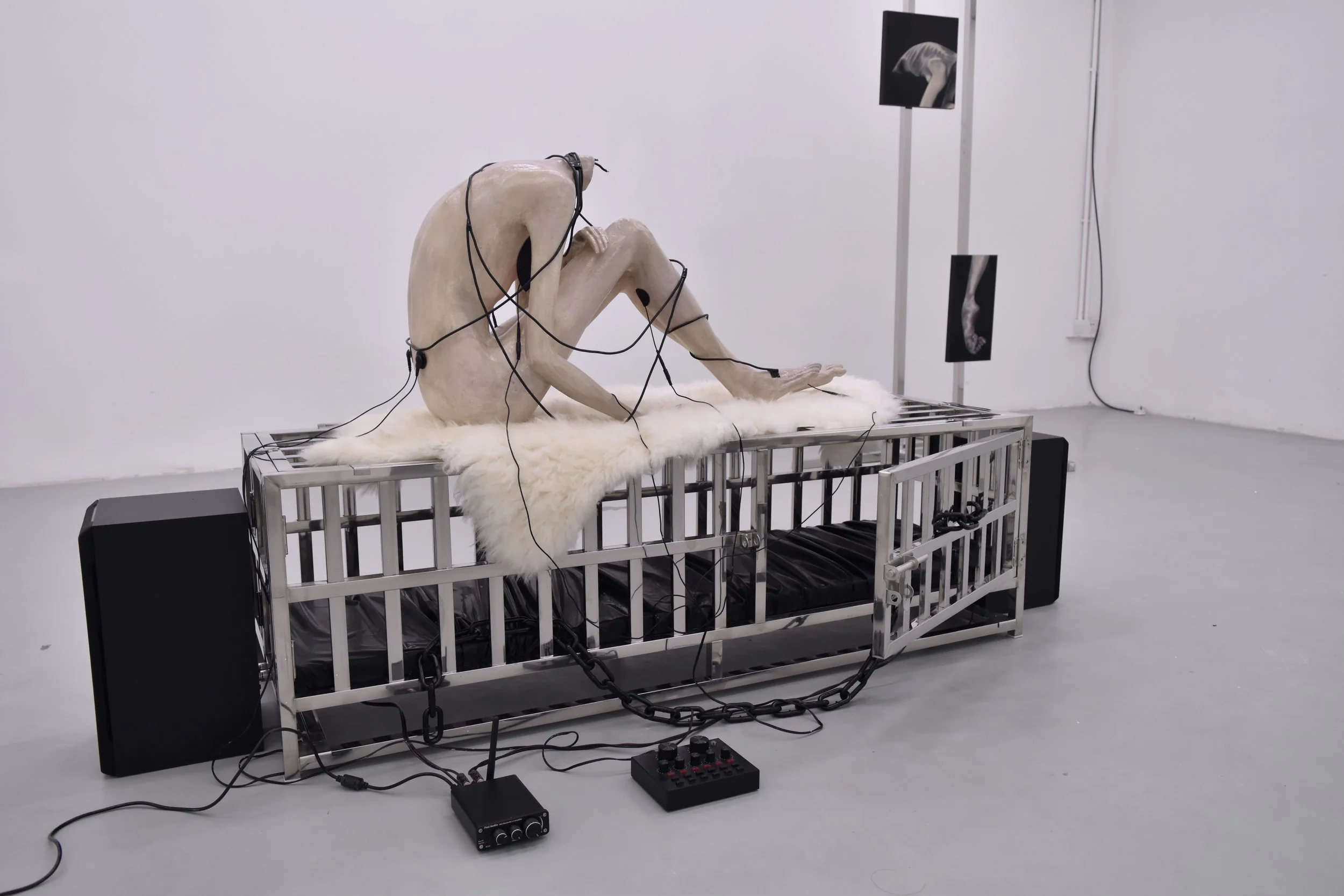
The Existence Outside, 2025, 167 × 70 × 83 cm. Resin, acrylic, wires, fur, metal cage, latex, foam mattress, chains, speakers and sound
Cracked Skin, 2025, 30 × 30 cm. Oil on wood panel
Those Who Cling Scraped Away by the Averted Gaze, 2025, 40 × 20 cm. Oil on wood panel
Hear the Voices That Beckon, 2025, 170 × 137 × 133 cm. Resin, plaster, coal pigment, fur, metal, wires, motion sensor light, security cameras, plastic, synthetic hair, and latex
Don’t, Don’t Do It Again
Alexia Project > Shanghai, China
2024
流入隐晦与失常
Into the obscure and dysfunctional
这场毗邻外滩的展览是项目构建的首个实地话语实践,源自轻罪的异想和有毒情节。实验音乐、影像、装置以及雕塑以忧郁羞涩的叙事散落现场,解构语言和空间。
Adjacent to The Bund, as the project’s first on-site contextual practice, the exhibition is a whim of misdemeanors and toxicity, scattered with melancholy or shy narratives with experimental music, installations, images and sculptures.
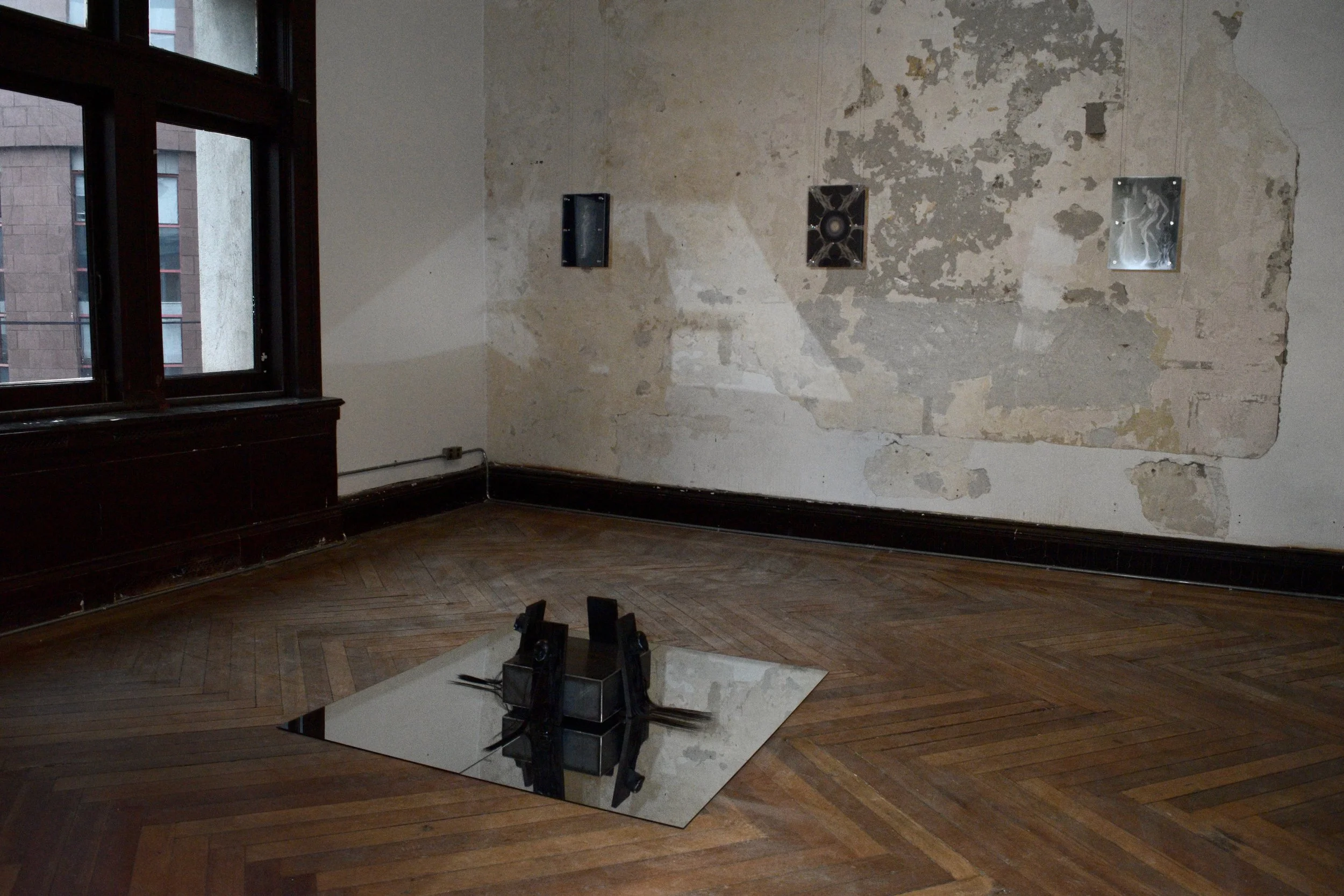
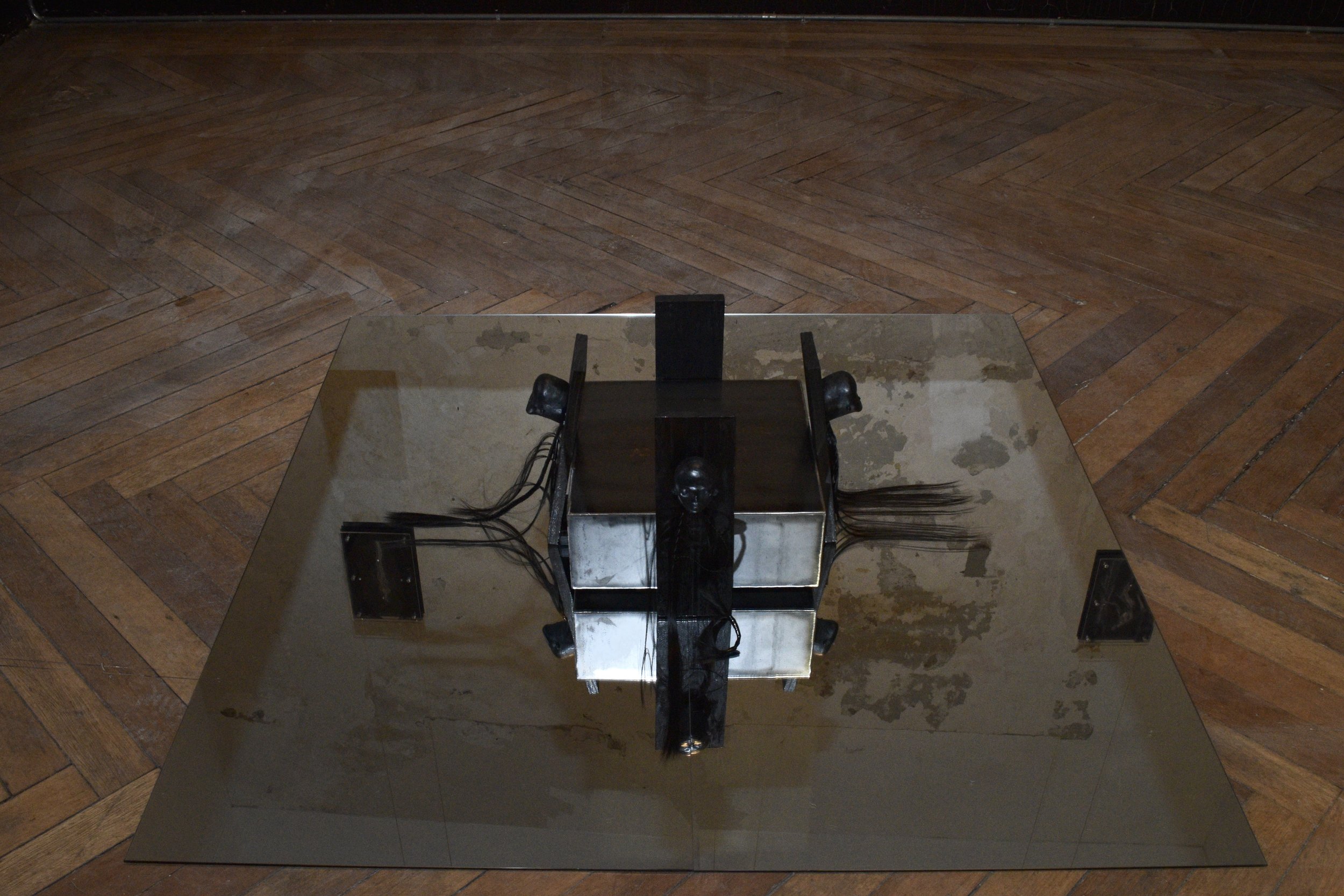
I Am Deliberate and Afraid, 2024, 114 × 114 × 34 cm. Metal, wood, plaster, and synthetic hair
LUmkA is pleased to present The Cult of Domesticity , a group presentation showcasing the work of Ilayda Çelik, Ruby Chen, Nereida Patricia, and Eden Taff. Opening 19 October 2024, the exhibition, installed site-specifically to a bedroom, is accessible only by appointment.
The American home, a construct of gender and family, was bred in the wake of the Industrial Revolution. As men left the house, women were left idle. To remedy such a hysteric case, Victorian society organized women’s roles into “The Cult of Domesticity.” This ethos of “True Womanhood,” served as a guide for the white and wealthy, encouraging piety, purity, submission, and domesticity. Isolating the majority from achieving such societal standards, “The Cult of Domesticity” attempted to preserve and perform white patriarchal power.
Yet, behind closed doors, a community and practice of mutual aid was formed. Women’s magazines carefully published articles that promoted feminist and emancipationist doctrines. Through print and needlework circles this privatized sphere evolved into a refuge for reclamation and subversion. Absent from man’s surveilling eyes, the home organized a space that propelled the Women's Suffrage and Abolitionist movements.
Adolescent and adult American uterine bodies were born with more rights than today. Trending archetypes such as "Trad Wives" and "Soft Girl Living” are propelled by mass media, resurfacing ideas reminiscent of “The Cult of Domesticity.” State by state, bodily autonomy and gender-affirmation procedures are becoming increasingly inaccessible. Political representatives with no medical experience are now qualified to determine the fate of each uterine and feminine body. The condition of choice and self- determination is furthermore endangered.
Exploring what blossoms in a privatized space, The Cult of Domesticity presents works exploring gender identity and femininity through subversive practices. The exhibition uses the bedroom walls to inspire redefinition and reverence towards the uterine and feminine experiences.
Cult of Domesticity
LUmkA > New York, United States
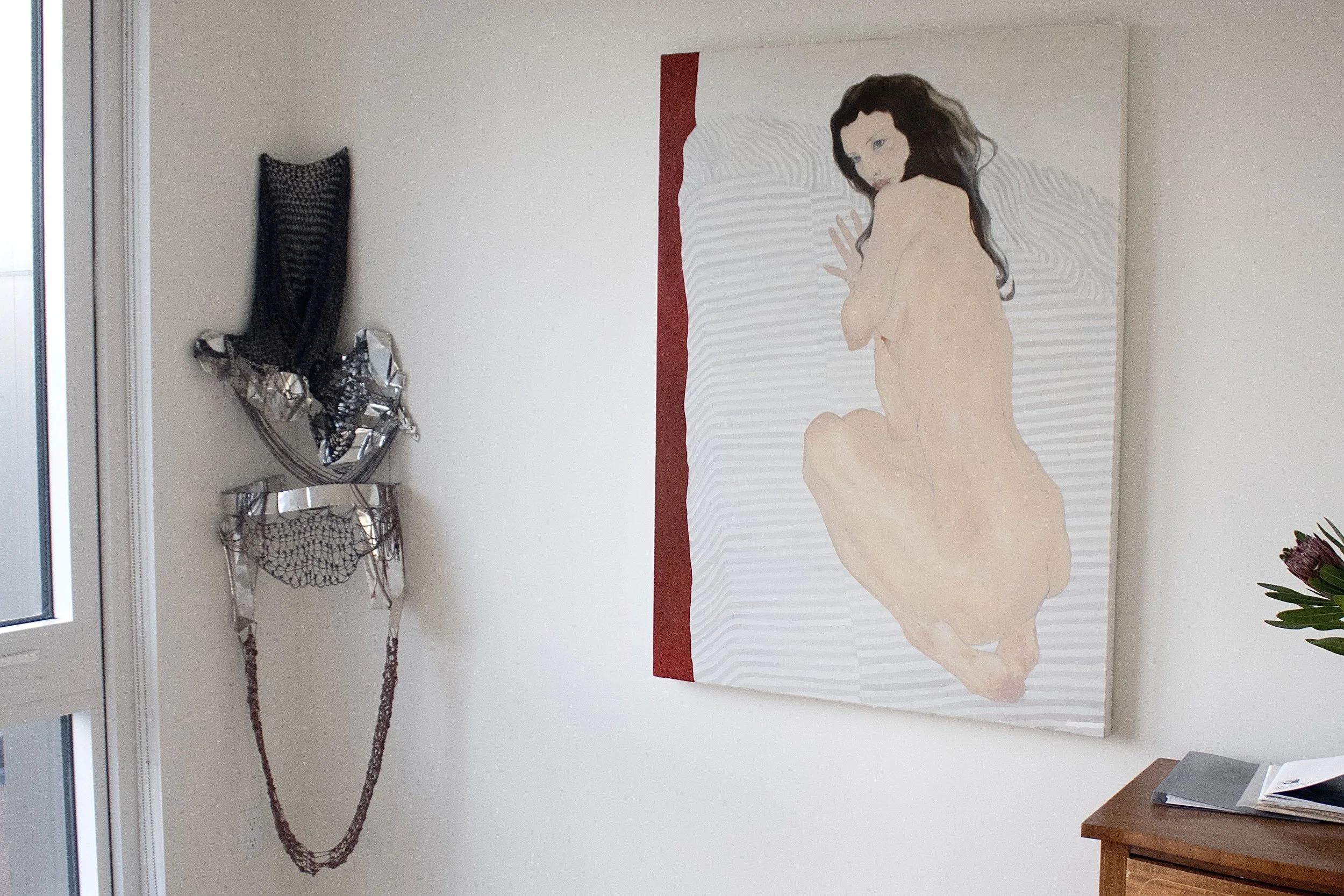
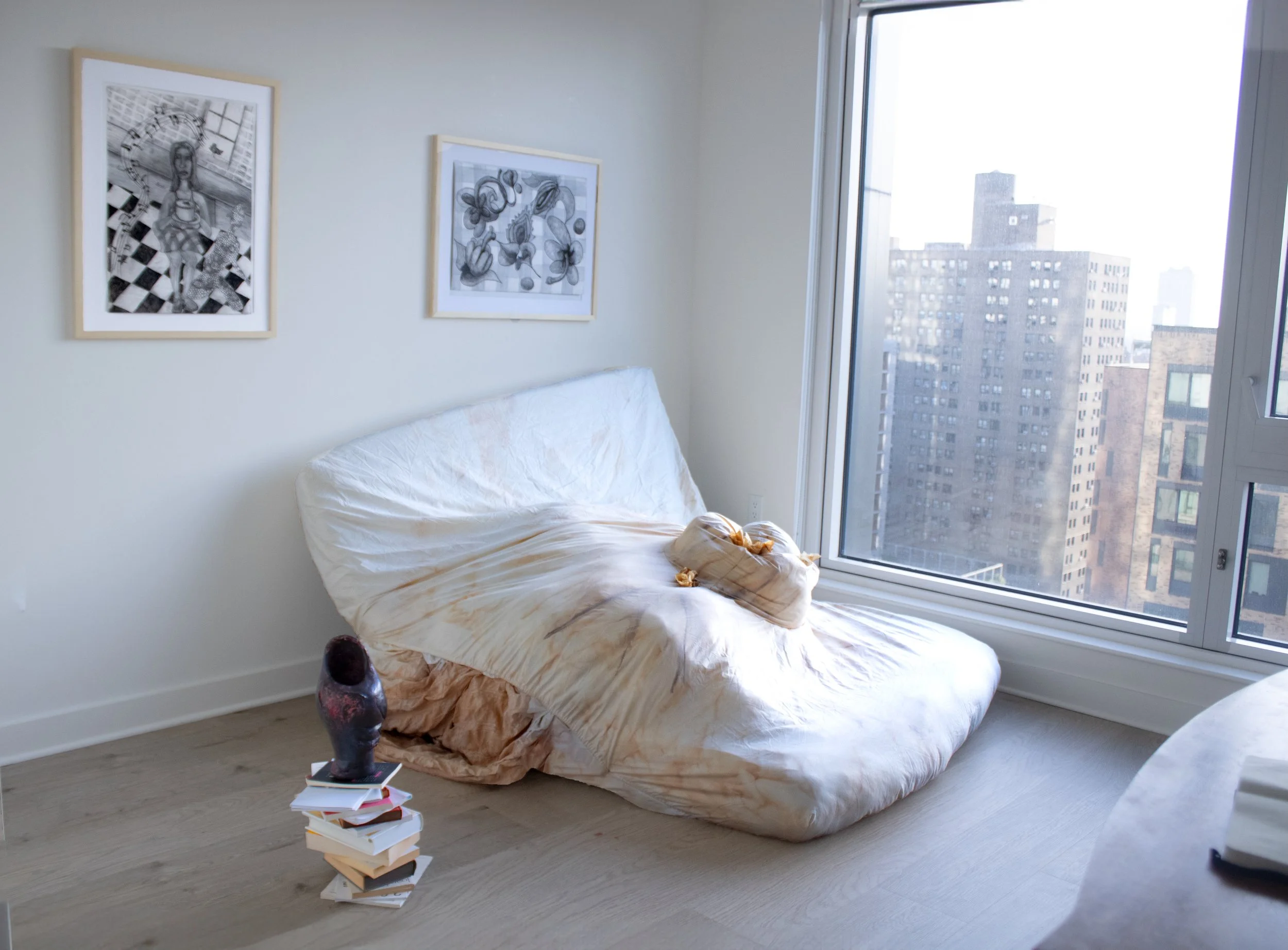
Performance Piece 001, 2023, dimensions variable. Clay, crocheted chainmail, and aluminum plates
Morphous 003, 2023, 33 × 13 dia. cm. Charcoal paint, lingerie, clay, and plaster
Assembly
New Art Dealers Alliance > NADA Curated by Katie A. Pfohl
NADA is pleased to present ASSEMBLY , an online exhibition curated by Katie A. Pfohl, Associate Curator of Contemporary Art at the Detroit Institute of Arts.
The seventh edition of NADA Curated brings together 25 artworks from NADA ’s international community, live on newartdealers.org through August 31st.
Assembly refers both to a gathering of people and a grouping of objects or materials. At its core is a common purpose: bringing together different people and divergent elements, from unexpected combinations of artistic materials to the organization of disparate individuals into a political movement.
This NADA Curated online exhibition includes twenty-five artists who reflect on assembly’s deep roots in art history and connection to vanguard political thought. At a moment when our ability to assemble is being tested globally, these artists help us envision new ways of coming together, of holding multiple truths, and of finding unexpected sources of connection.
These artists show us that assembly—paradoxically—often requires disassembly: old ideas, materials, and concepts, reassembled into something new. Through their art, they rethink the logic of industry and capitalism, reconstruct a renewed relationship to community and ancestry, and reconsider our connection to land and the environment. Drawing together a global range of artists, this online exhibition spans many different geographies and contexts to itself function as a kind of assembly: a gathering of artistic voices to help guide our future thinking.
As we face a moment of great political, ideological, and social division, these artistic explorations of the notion of assembly—from the factory line to the protest line—give shape to our next moves.
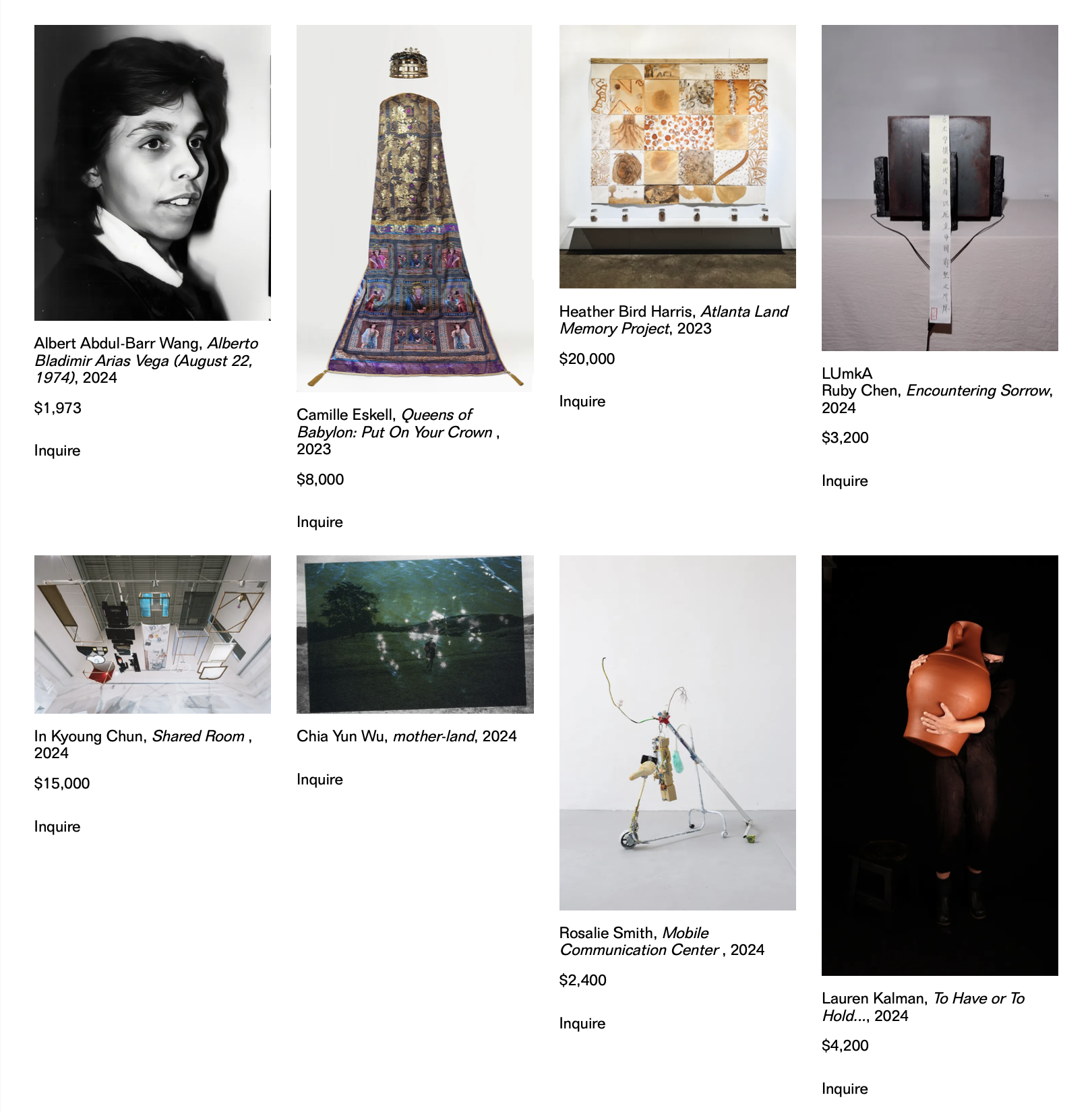
Encountering Sorrow, 2024, 40 × 40 × 60 cm. Steel, painted concrete, ink on rice paper, speaker and sound
SKIN/IN SITU
LUmkA > New York, United States
2023
LUmkA is pleased to present SKIN/IN SITU, an exhibition curated by Cortney Connolly. On view 2 - 4 December 2023, the Gallery’s inaugural exhibition will feature environmental performance, Environment 001. Please join us 2 December 2023 from 7 - 9 P.M. for an opening reception and live demonstration.
Dancing in the gray area between active and passive sexual expression, SKIN/IN SITU examines the cycle of endangerment applied to the performance of female sexuality. In the environmental installation, human-esque vessels dressed in cut assemblages of lingerie are activated and altered through ritualistic gestures and choreographies. SKIN/IN SITU edges sensory stimulation to inquire and provoke meditation on the dynamics between expression and audience.
Employing themes of deviance and obscenity, the performance informed by abstract calcified stretched compositions and their projected dancing figurative sisters, build an environment for audience activation. Whether absent, abstracted, or embodied, the sensuality of each medium arouses reflection to the collective’s conscious consumption. Inspired by Judith Butler’s theory of performative acts, the intermedia conversation explores the audience’s responsibility for the dynamics of a safe space of sexual expression.
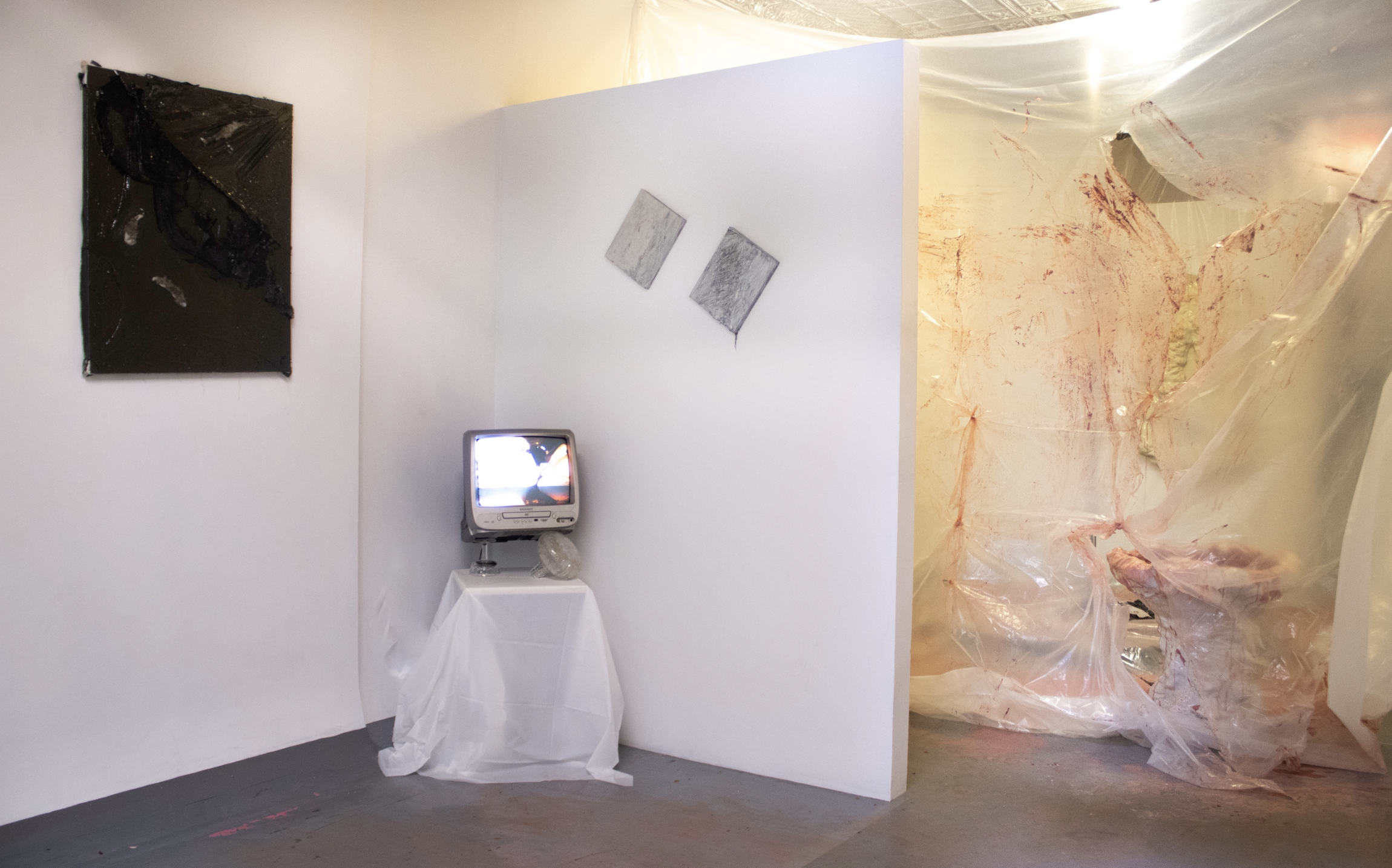
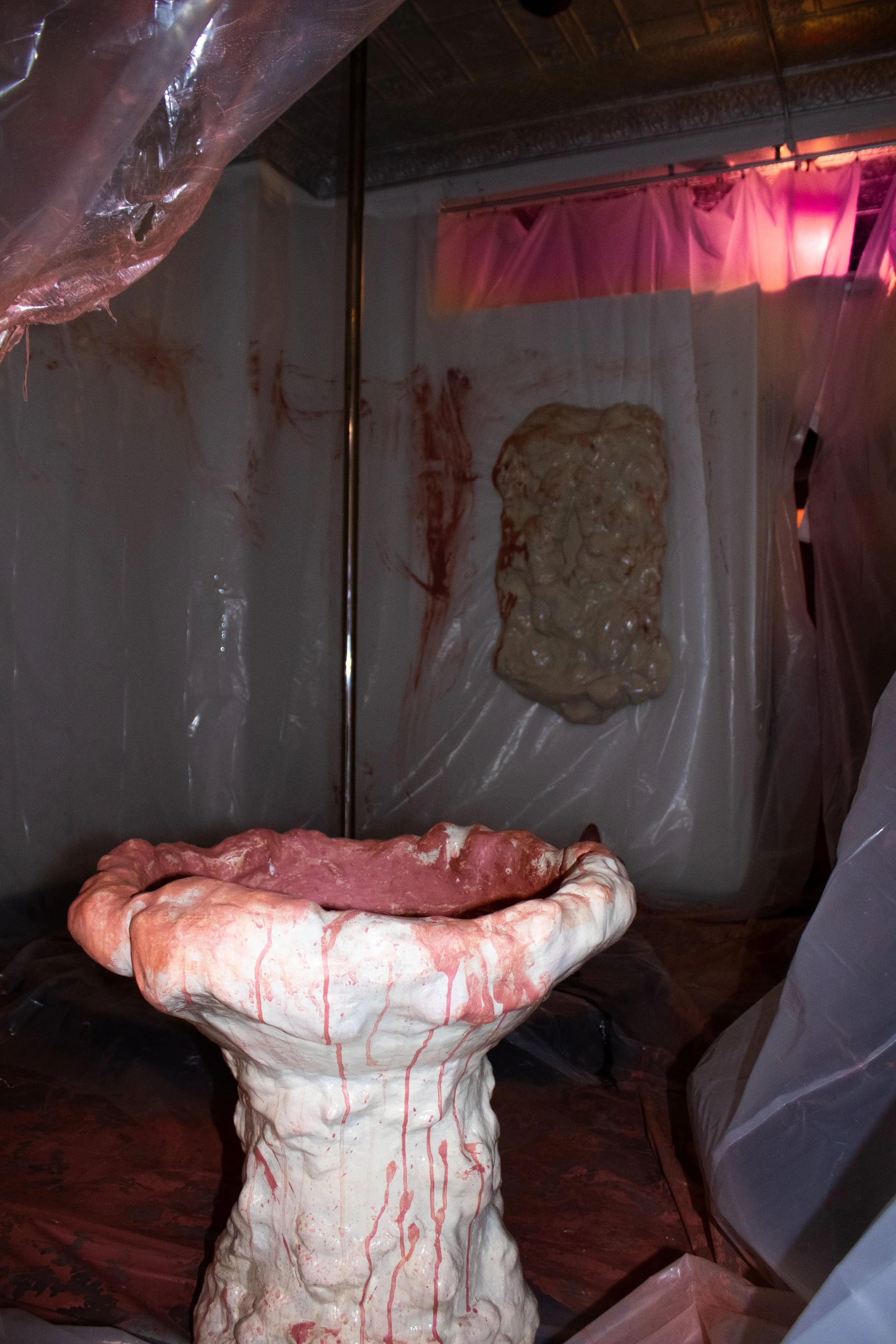
Morphous 001, 2023, 61 × 63.5 dia. cm. Plaster, acrylic, varnish, and mixed media skeleton
Morphous 002, 2023, 127 × 71 × 7.5 cm. Plaster, acrylic, varnish, and mixed media skeleton
Performance Piece 001, 2023, dimensions variable. Clay, crocheted chainmail, and aluminum plates
Morphous 003, 2023, 33 × 13 dia. cm. Charcoal paint, lingerie, clay, and plaster